SPOILERS AHEAD FOR MIDNIGHT MASS, BUT YOU SHOULD STILL WATCH IT
There’s a line in Mike Flanagan’s Netflix show Midnight Mass I think about often. (Flanagan’s best, imo, and a masterpiece in dialogue.)
Leeza is a teenager who lives in a small fictional island town in the middle of nowhere. It’s a church-going town and Leeza is often portrayed as a sweet, God-loving girl “despite” her challenge. Her challenge being that she is paralyzed from the waist down after the “town drunk” accidentally shot her in the woods. The story of how Joe Collie becomes the town pariah is a masterpiece is writing trauma in men and a lesson in how the patriarchy destroys them.
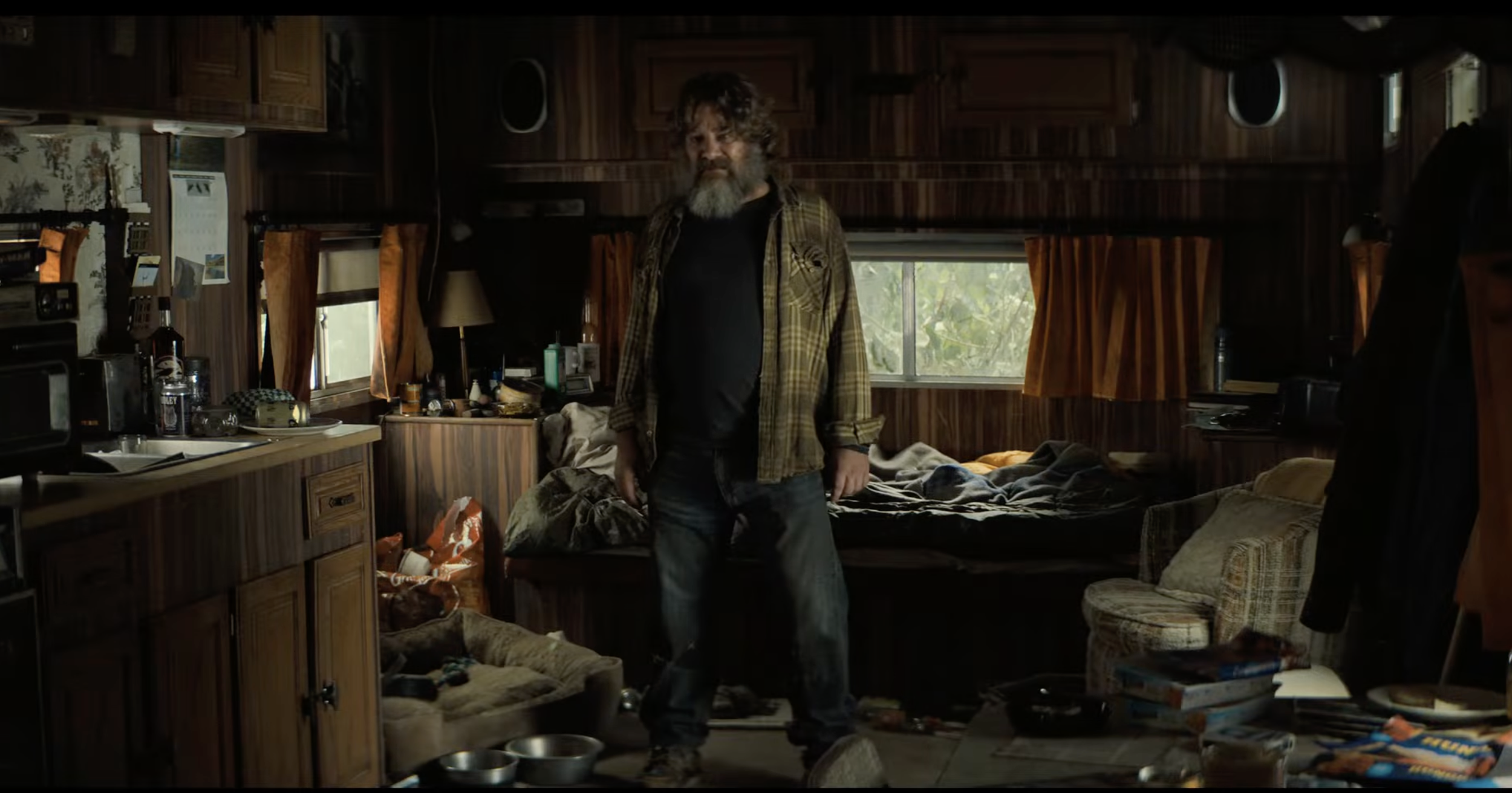
Through some things that transpire in the show, young Leeza is able to miraculously walk again. A few days after this miracle, Leeza walks up to the Joe Collie’s trailer. That scene alone is one of the best pieces of writing on television. The Bear could never.
She climbs up into his dingy space that’s burgeoning with empty liquor bottles and self-abandonment. Joe Collie has no words when he sees her. The actor who played him, Robert Longstreet, demonstrates the impossibility of grasping what’s happening in front of him — the miracle, the relief, the joy of seeing her walk again — and the kaleidoscope of shock, despair, and self-hatred — the grief of a prisoner who locks himself in with his shame.
The actor who plays Leeza, Annarah Cymone, does something I’ve never seen before on television. She portrays how messy forgiveness is. She waves her finger at him through burning, angry tears, barely containing herself.
In that thin-as-hair line between serenity and rage, she moves forward towards Joe, and says “You reached through time, Joe Collie and you stole.”
I am about to leap into an unlikely analogy with the power of these words.
Lately, I’ve been writing for myself a lot more, many I post on my blog, few I post on socials, most I don’t post anywhere. Through IndieWebClub meetups in Bangalore, a network of people who want to write, design and build their own web presence and take their identity back from social media, I have found that not only do I have the agency to take back my space on the internet, but access sovereignty in my words online away from social media silos.
As a writer and journalist often in service of another publication (and always in service of my story), I have not had the space to think about writing without an audience in my head. The prestige complex that often comes with being chronically online in a public-facing job was a great breeding ground for letting Big Tech take over the spaces I inhabit with my writing in the world, and inside my mind. It felt like having a PR team in my head at all times.
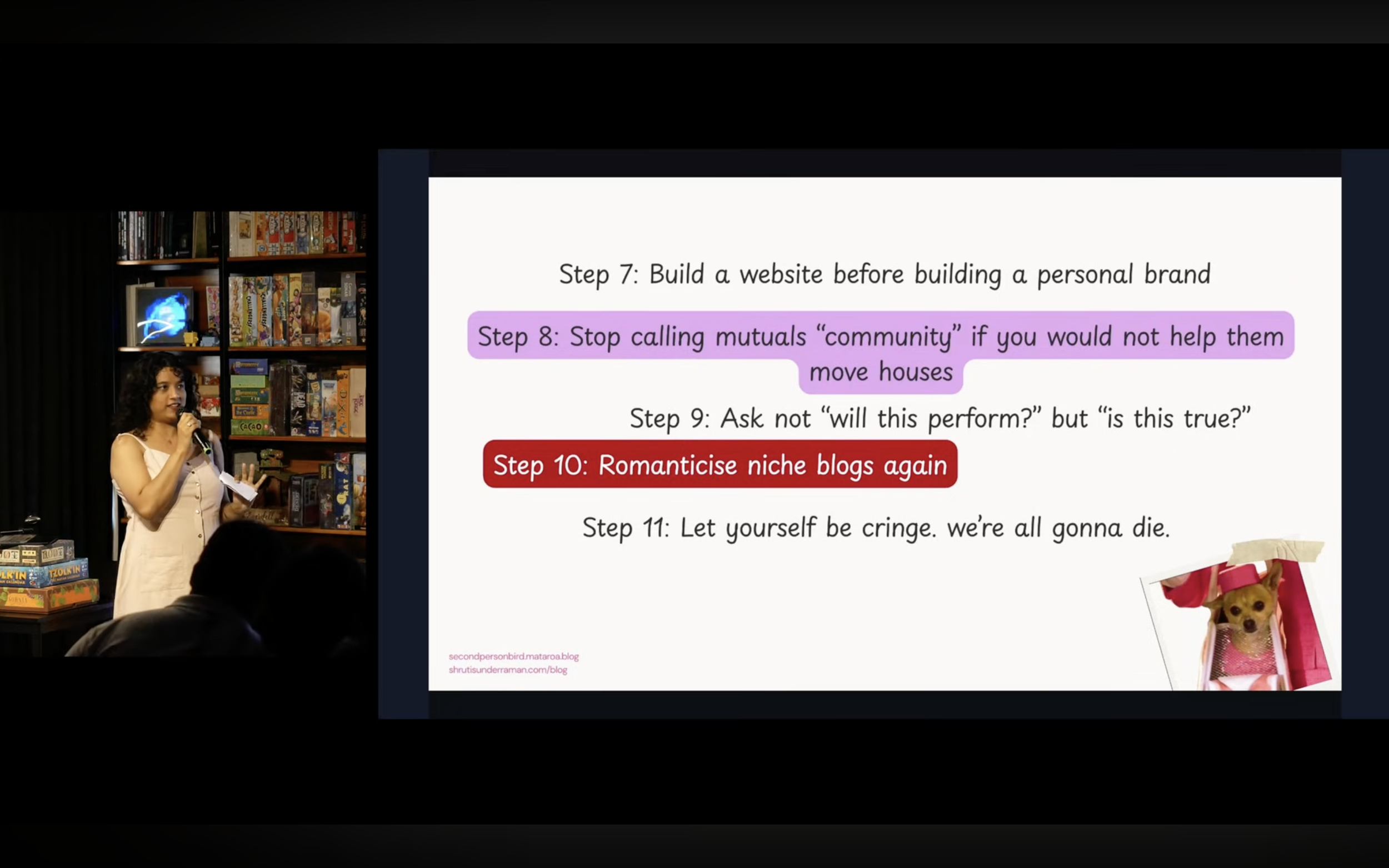
A small talk I gave at the Indie Web Club anniversary event about recovering from social media sorryness.
It took a lot of time to work on the prestige complex damage done by a social media-dependent self, to fire the whole PR agency in my head.
I have created a Virginia Woolfian room of my own with my writing, it’s not well-modelled but it is my own, and that will have to do. It has a guest room for inspiration to stay over.
But lately, after all this work, I find possibilities of the PR agency replaced by a more sinister presence in my head. The voice that tells me “this reads like AI”.
Many of things A.I. writing loves are things I loved first:
Rules of thirds.
Hyperboles.
Not just this but also (s).. (although I consider this lazy writing hehe).
Em Dashes.
Randomized hyphens.
Drama (my god, the drama).
Great headline game.
These are things I’ve known from alphabet to thought my entire writing life.
Even in design, I’m a header footer guy. It’s an old journo trope. We love a good footnote with source links, name of the writer on every slide (I justify this by saying this is to protect our words from being stolen but I think sometimes we just like sleeping with our bylines).
So to hear someone ask me how I converted my latest blog about cats into Claude-generated Insta carousels really threw me off. The question was innocuous enough and it came from a loved one, so I wasn’t really clutching my pearls.
But it added one more employee to the “this reads like AI” fear entourage.
There’s a lot this fear has taken away from me. It overstays its welcome and brings its foul friends.
I worry about writing three concepts in a row; about my love affair with tangerine headlines. I can’t shake off that horror movie feeling that my colour choices are being watched not just by AI but also by human eyes that, like mine, are hypervigilently scanning everything they consume for AI stamps.
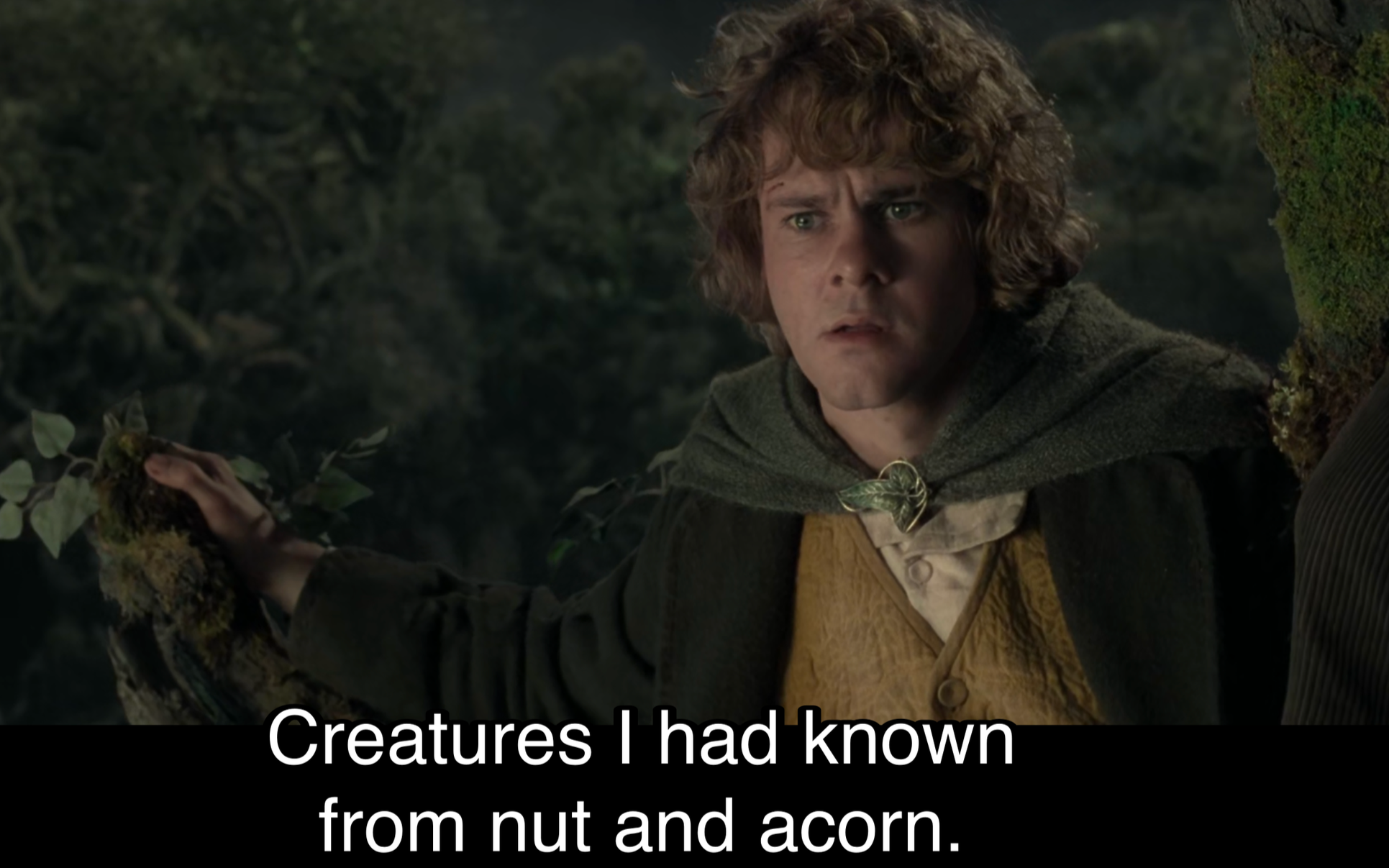
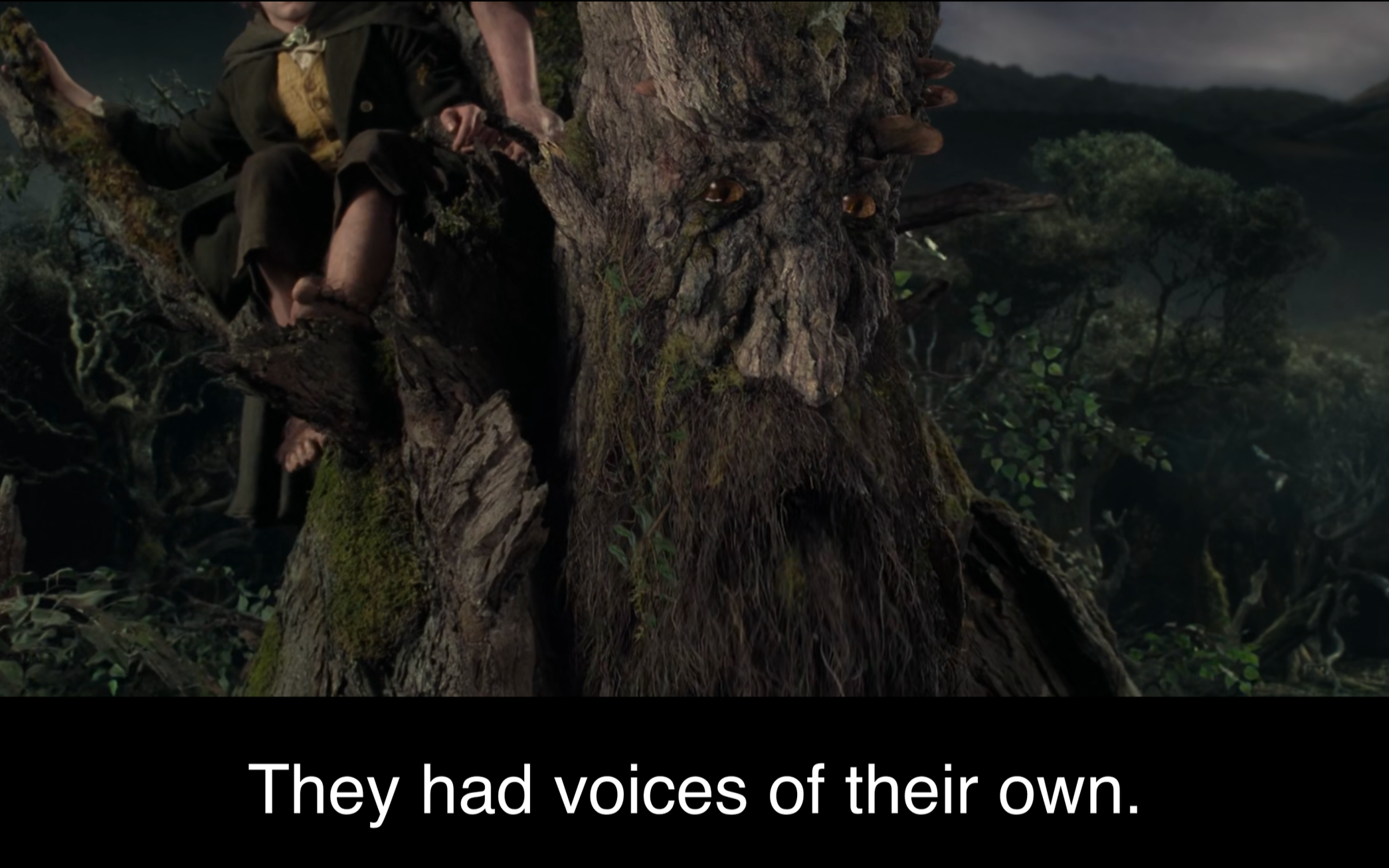
My relationship with my writing is sacred and sovereign. I did not militarize this room. The only tools here are tenacity and grit and long hours and pens and an abundance of imagination. I have a vase full of hydrangeas in this stone cabin. My walls are mirkwood brown with forest green; a tree grows inside me. When I write in this room, I’m a fish in water. I have gills.
When the voice of “does this read like AI?” comes to visit, the lights dim, and the tree shrinks and the flowers wither and the fire hides. I am a fish in tall grass.
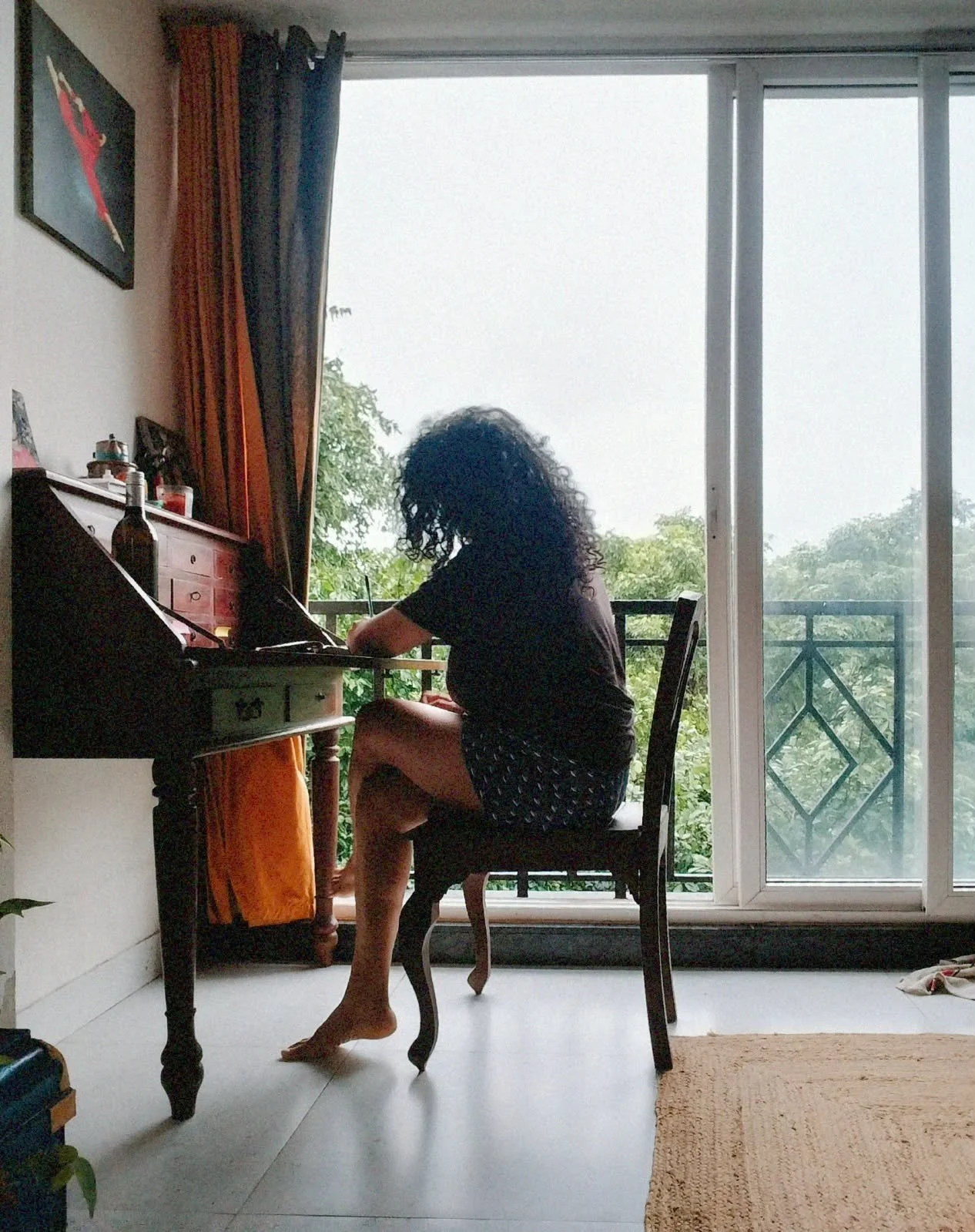
I don’t know if there are words to express how this feels. This is a garden I grew for over a decade, a library of commons, a bed of other people’s lives, curtains of hope, and all the words that are other people’s words and the words that came before them.
When that A.I paranoia knocks, it nudges me to write away from who I am, just so I stand out (so it will have more orginal modalities to consume), I hear Leeza’s words in my head.
“You reached through time, … and you stole.”
As I write this post without a single “will this read like AI?” sweep, I, too, feel like a miracle walking into the cabin where Joe Collie lives.
The greatest thing in that trailer scene in Midnight Mass is what happens after Leeza says those words.
She forgives him. (In a phenomenal acting choice, Longstreet, flinches at her forgiveness.)
Leeza does not forgive him like the Mother Mary she worships; there is no prayer in her forgiveness. She forgives him the way forests forgive man—with memory and anger and flood and plague and the absolute knowledge that it will grow again. This is true grace.
I don’t know about the forgiveness parallel here for me, for human greed created my word-thief and I am human, therefore, I am part of the problem. But perhaps I will grow where I’m planted, become a forest here, and write with seventeen Em Dashes and headers and footers and be the fool I want to see in the world. Perhaps I will outwrite my stolen wealth.
Perhaps the decolonisation of the “does this read like A.I?” paranoia in my writing starts here.
In this moment.
With this rule of three.
And a song in my heart.